
The opening article
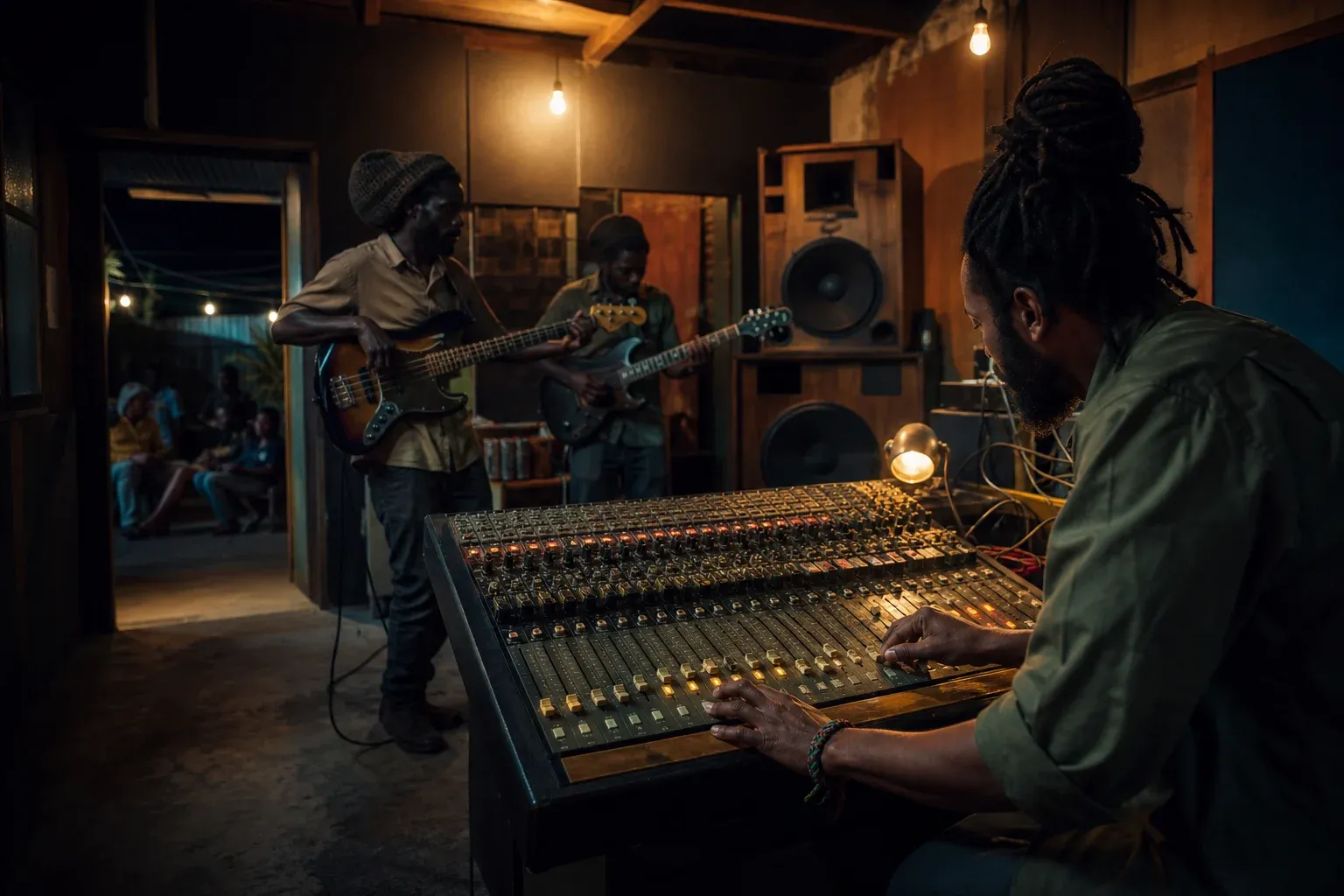
How Dub Made the Studio an Instrument
Dub grew from Jamaican recording, sound-system, and version practices. Its mixers turned an existing rhythm into a new performance through subtraction, routing, echo, and reverb.
Read the articleIssue one
How records make time, space, and identity audible
Eight essays move from Jamaican studio practice to rhythm sections, scene histories, riffs, and guitar recording. Each stands alone.
- 0223 min
production
Why Bass and Versions Hold a Dub Mix Together
A dub mix can lose its singer, chords, and much of its drum kit without losing identity. Bass phrasing and version culture explain how that structure survives.
- 0323 min
listening
How to Hear Space in a Mix
Distance in a recording is built from level, timing, frequency, stereo position, and reflections. This guide separates those cues so you can compare them deliberately.
- 0423 min
rhythm
How Rock Rhythm Sections Create Motion
Rock can sound loose, rigid, swinging, heavy, or restrained before the guitar tone changes. Much of that character begins in the relationship between drums and bass.
- 0523 min
genre history
Gothic Rock Is Not Gothic Metal
Gothic rock grew from post-punk scenes. Gothic metal developed through metal lineages. Shared imagery and atmosphere can conceal major differences in rhythm, guitar, voice, and scene history.
- 0623 min
rhythm
How Metal Riffs Organize Rhythm
A metal riff can act as rhythm, harmony, texture, and formal signal at the same time. Its weight comes from articulation and ensemble timing as much as tuning or gain.
- 0723 min
genre history
Punk Before and After 1977
Punk did not appear fully formed in one city or end when its first famous bands changed direction. Records, clubs, print, touring, and local participation kept redefining it.
- 0823 min
production
What Double Tracking Does to a Guitar
Double tracking records the same part in two separate performances. Small timing, pitch, and tone differences can add width and thickness when the takes play together.