
Two histories behind one adjective
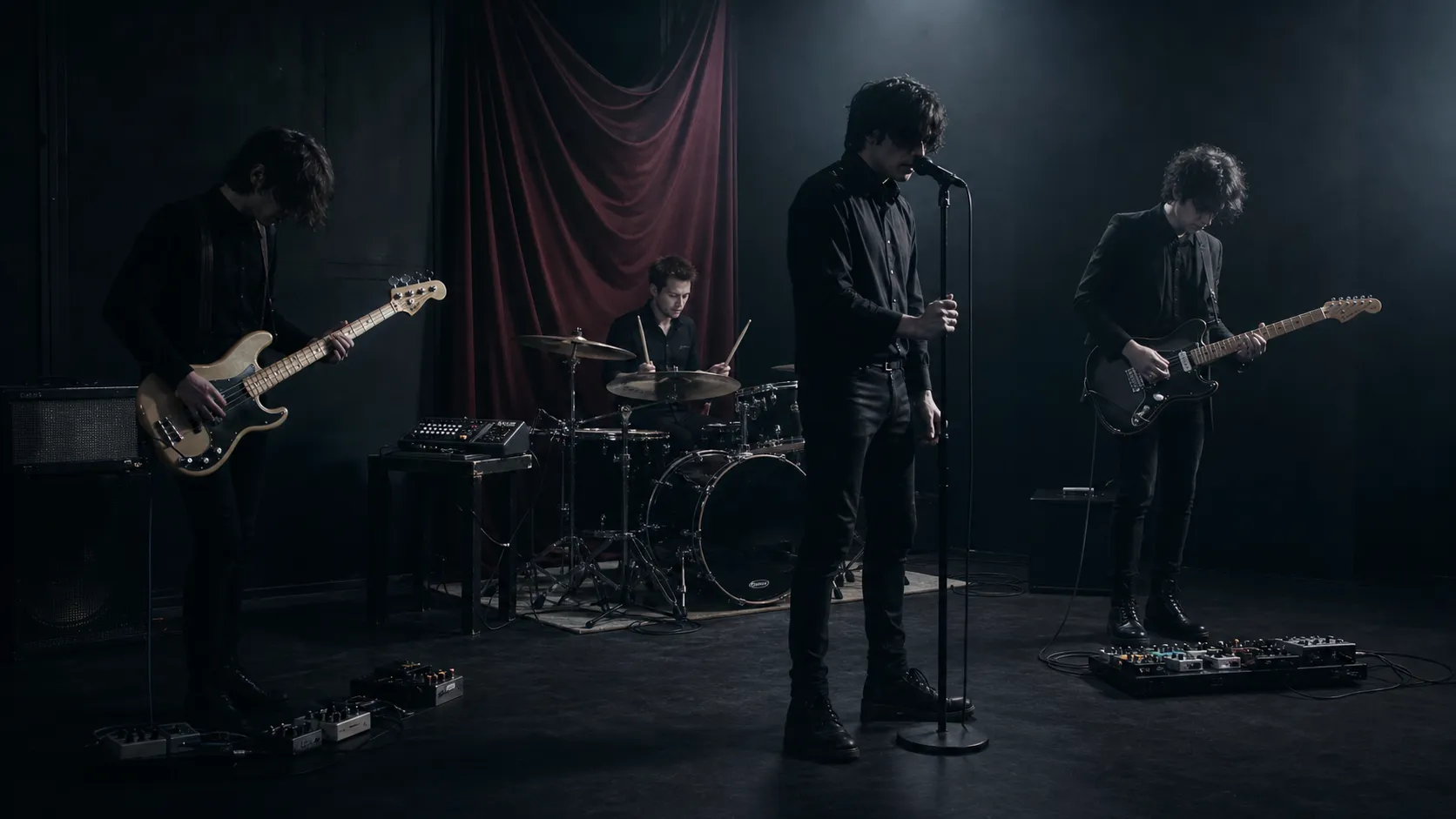
“Gothic” can describe literature, architecture, atmosphere, fashion, a subculture, or several kinds of music. That flexibility causes confusion when gothic rock and gothic metal are treated as alternate names for the same sound. They are not.
Gothic rock emerged from the British post-punk environment around the end of the 1970s and the beginning of the 1980s. Bauhaus, Siouxsie and the Banshees, the Cure, and other artists are repeatedly discussed in accounts of its formation, although labels were disputed and often applied retrospectively. A musicological study of Bauhaus’s 1979 single “Bela Lugosi’s Dead” treats it as a central point in the consolidation of gothic rock while also acknowledging earlier associations and context. 1
Gothic metal belongs to metal history. It combines metal riffing, amplified weight, and metal vocal or rhythmic practices with approaches that may include atmospheric keyboards, romantic or gothic subject matter, contrasting voices, doom-derived pacing, or symphonic arrangement. Those features vary by band and region. The metal lineage remains audible even when the visual language overlaps with goth.
Post-punk opened the route to gothic rock
Punk did not end in one coordinated stylistic change. After its first British wave, musicians kept its independence and economy while widening the available sounds. Some bands drew on dub production, glam, art rock, electronic instruments, disco, funk, and avant-garde practice. Post-punk is the broad historical field in which gothic rock became recognizable, not a synonym for goth itself.
Simon Reynolds documents how bands after punk treated studio process, rhythm, and texture as open questions. 4 That context explains why early goth records rarely share one guitar setting or drum feel. They are connected partly by what they made from post-punk’s expanded permission.
Bauhaus’s “Bela Lugosi’s Dead” is unusually useful because its sparse rhythm, dub-like space, delayed guitar, and theatrical vocal make several emerging traits audible in one record. It was released in 1979 before goth existed as a stable marketing category. The record should therefore be heard as evidence in a developing field, not as a rulebook written for a completed genre.
Siouxsie and the Banshees, the Cure, Joy Division, Magazine, Killing Joke, and other post-punk artists are frequently placed near goth histories, but their relationships to the label differ. Discographies change style. Musicians accept, reject, or ignore names applied by journalists and audiences. A useful history can acknowledge influence without reclassifying every recording by a dark-associated artist as gothic rock.
A scene became more coherent in the early 1980s
Genre requires more than sonic resemblance. Clubs, record shops, small labels, fanzines, concert bills, clothing practices, friendships, and repeated audiences allow a scene to recognize itself. London’s Batcave, opened in 1982, became a visible meeting point, but it was neither the sole birthplace nor a complete map of British goth.
The Museum at FIT’s account of the Batcave connects music, performance, fashion, and club culture while noting its role in defining the emerging scene. 2 The club’s fame should not erase activity in Leeds, Northampton, Manchester, and other places, nor the networks that carried records beyond Britain.
Leeds became strongly associated with the Sisters of Mercy, the March Violets, Red Lorry Yellow Lorry, and a harder, repetitive strand of gothic rock. John Robb’s history gives regional scenes room to remain distinct rather than treating London as the only center. 5
Mick Mercer’s contemporary scene writing and later histories document many bands that do not fit a short canon. 6 This matters because a genre reduced to four famous names becomes artificially narrow. It also makes later boundary disputes seem solvable through resemblance to one singer or guitar tone.
Goth culture exceeds a list of records
Paul Hodkinson’s ethnography studies goth as an enduring subculture with networks, commerce, identity, and participation. 7 Music remains central, but membership is not decided by an audio classifier. People enter through clubs, friends, clothing, magazines, online communities, festivals, and records, and they do not all draw the same boundary.
Lauren Goodlad and Michael Bibby’s collection places goth within questions of class, gender, race, resistance, and consumption. 8 That scholarship pushes against a harmless caricature of uniformly pale, apolitical people in black. It also prevents musical history from assuming that visual style has one fixed social meaning.
The distinction between gothic and goth is useful here. Gothic can describe literature, architecture, cinema, religious imagery, horror, romanticism, or atmosphere. Goth names a music-centered subculture and its histories. A metal band can draw on Gothic fiction or cathedral imagery without belonging to goth culture. A goth band can write about ordinary urban alienation without using supernatural subjects.
Karl and Beverley Spracklen examine how collective memory and boundary-making shape goth’s development. 9 Arguments about authenticity are therefore part of the culture’s history, not merely noise surrounding a perfectly objective genre.
Heavy metal followed another family tree
Heavy metal developed from late-1960s and early-1970s hard rock, blues-derived riffing, amplified weight, and bands including Black Sabbath, Led Zeppelin, and Deep Purple. The exact boundary between hard rock and early metal remains debated, but this history predates gothic metal and does not descend from the early-1980s goth club network.
Robert Walser analyzes metal through riffs, power, virtuosity, timbre, and social meaning. 10 Deena Weinstein treats metal as a musical culture with its own codes, audiences, institutions, and genre history. 11 Their work makes it difficult to define metal through distorted guitar alone. Instrument roles, performance values, scenes, and lineage also matter.
Metal divided into heavy metal, doom, thrash, death, black, power, progressive, and other traditions. These names describe changing scenes and practices rather than preset folders. Gothic metal emerged later through particular combinations inside that metal history.
Doom and death-doom supplied crucial metal roots
Doom metal extended the slow pacing, low-register riffs, sustained weight, and ominous harmonic language associated especially with Black Sabbath. Death metal added another lineage of vocal technique, guitar articulation, drumming, and underground circulation. In the late 1980s and early 1990s, death-doom bands combined aspects of both.
Paradise Lost, My Dying Bride, and Anathema are central to accounts of British death-doom and early gothic metal, although their discographies developed in different directions. The metal source is audible in heavy riff structure, low tuning, growled vocals, double kick vocabulary, and the way guitars organize form.
Garry Sharpe-Young’s guide places gothic metal alongside doom, death, black, and other metal categories rather than inside a post-punk genealogy. 12 This classification does not deny later goth influence. It establishes which musical system was present before the hybrid acquired its gothic modifier.
Gothic metal was never one formula
Some 1990s European bands combined doom- or death-derived heaviness with keyboards, romantic melancholy, violin, clean singing, or contrasting vocal registers. Others moved toward symphonic arrangement, alternative metal, electronic production, or accessible rock. The label collected several trajectories rather than one invention.
The frequently discussed “beauty and the beast” vocal contrast places a high clean voice against a growled or rough male voice. It became recognizable in parts of the scene, but it is not a definition of gothic metal. Bands without the pairing can belong to the history, while bands using it may be symphonic, doom, or another metal style.
Rosemary Hill’s study of gender, metal, and media is important when these vocal roles are described as naturally feminine and masculine. 13 Register, timbre, costume, marketing, and stage roles are constructed practices. Analysis should name what performers do without turning a period convention into biological destiny.
Begin with the rhythm section
In gothic rock, bass frequently carries a melodic ostinato. It may outline the harmony, repeat a figure across several chords, or provide the most continuous pitched line in the song. Guitar can leave open space around it, adding clipped chords, single-note figures, harmonics, noise, or sustained effects.
Gothic metal more often gives distorted guitar riffs a central structural role. Bass may reinforce the guitar’s low register, while drums articulate the riff through kick patterns and larger dynamic changes. This is not a universal rule, but it is a better starting comparison than “dark versus darker.”
Listen for note duration. A gothic rock bassline may connect a dry drum-machine pattern while the guitar decays into reverb. A gothic metal arrangement may use palm-muted attacks, sustained power chords, or doubled guitars to create mass. The first organizes space around independent parts; the second often builds a coordinated wall from several aligned layers.
Gothic-rock bass often carries the song’s memory
Foregrounded bass is a useful gothic-rock clue, though not an exclusive requirement. A repeated line can state roots, connect them with passing tones, and preserve a hook while guitar leaves space. Chorus, pick attack, compression, and upper harmonics can keep it audible without overwhelming sub-bass.
In metal, bass more often reinforces guitar riffs when distorted guitars define harmony and rhythm. The question is functional: does bass provide an independent ostinato around which guitar moves, or add mass to a guitar-led figure?
Drums reveal different ideas of force
Gothic rock can use acoustic drums, machines, or hybrids. Repetitive patterns, gated timbres, tom figures, and restrained cymbals can make a beat severe or danceable. Metal drumming usually responds to riffs through kick reinforcement, cymbal accents, and fills. Doom leaves large spaces; death-derived styles may use double kick and rapid subdivision.
Compare kick placement. In gothic rock it may hold a stable grid beneath independent bass. In metal it may duplicate low guitar attacks so the riff becomes an ensemble rhythm. Similar imagery above those foundations does not remove the difference.
Guitar tone and arrangement
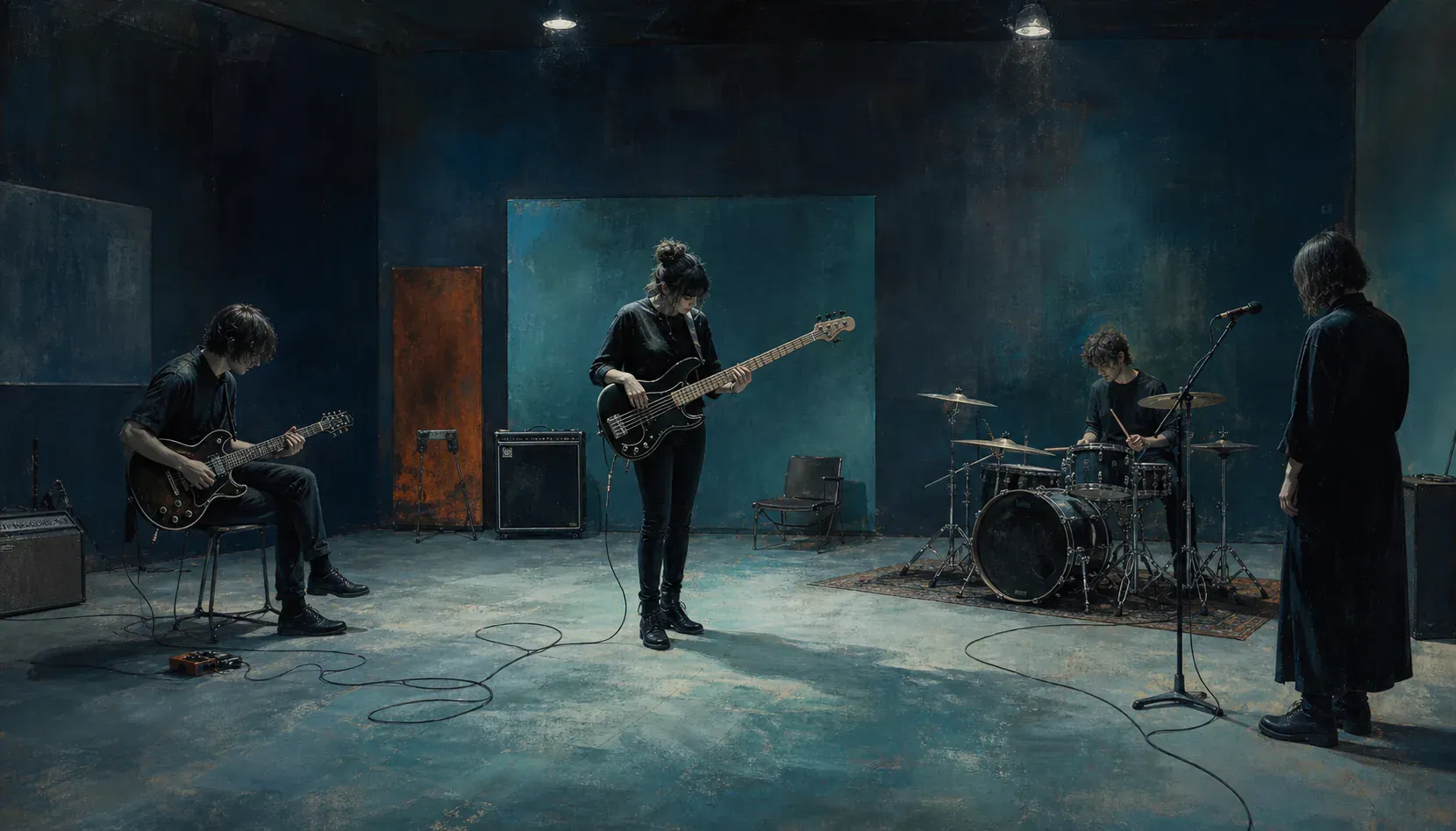
Gothic rock guitar does not require heavy distortion. Chorus, flange, delay, reverb, and bright amplification can make a clean or moderately driven sound feel wide, unstable, or distant. The guitar may behave less like a block of harmony and more like a moving surface.
Gothic metal guitar usually retains stronger links to metal technique: riffs, power chords, alternate or tremolo picking, palm muting, and low-register reinforcement. Keyboards or orchestration may expand the atmosphere, but they do not erase the guitar’s rhythmic function.
Distortion alone cannot settle the question. Some gothic rock is abrasive. Some gothic metal contains clean passages. Follow what the guitar is doing, not merely how much gain it has.
Gothic-rock guitar often supplies edges, reflections, and interruption. A short chord can enter a long delay; a high figure can leave bass to define harmony. Feedback can mark a transition rather than produce continuous mass.
Metal guitar commonly organizes the bar through riffs. Palm-muted notes create short attacks, open chords sustain, and rests make the ensemble stop together. Multiple tracked performances enlarge the image while preserving the rhythmic figure.
Do not classify from gain alone. Gothic rock can be heavily distorted, and gothic metal can contain clean guitar. Follow who carries harmony and time during the section.
Keyboards and orchestration do not settle the category
Keyboards occur in darkwave, gothic rock, doom, gothic metal, symphonic metal, industrial music, and pop. A string pad or organ timbre supplies associations, not a genre certificate.
In gothic rock, synthesizer may share a repetitive pulse or replace guitar texture. In gothic metal, it can double chords, introduce counterlines, bridge quiet and heavy passages, or broaden a riff-led arrangement. Remove it mentally and ask what bass, drums, and guitars still do.
Production creates different kinds of darkness
A gothic-rock record may combine deep bass, thin guitar, large snare reverb, vocal delay, and negative space. Gothic metal may layer distorted guitars, controlled low mids, close kick attack, keyboards, and vocal stacks. Both can be raw, polished, spacious, compressed, or electronic.
Compare relationships rather than adjectives: direct-to-reverberant balance, density during vocals, guitar sustain, bass independence, and the way drums pass through the arrangement. A preset called gothic can reproduce a surface while missing the musical organization.
Voice is evidence, not a verdict
Low male voices appear in both fields. So do higher voices, spoken delivery, dramatic projection, and contrasting vocal parts. A baritone timbre can contribute to gothic rock, but the register does not turn an unrelated rock or metal recording into goth.
In gothic rock, voice may sit against a spare rhythmic field, using restraint, repetition, or theatrical distance. Gothic metal can use sustained melodic lines, operatic technique, harsh vocals, or exchanges between contrasting singers. Regional and chronological differences are substantial, so a single vocal stereotype quickly fails.
Clubs, records, and self-identification
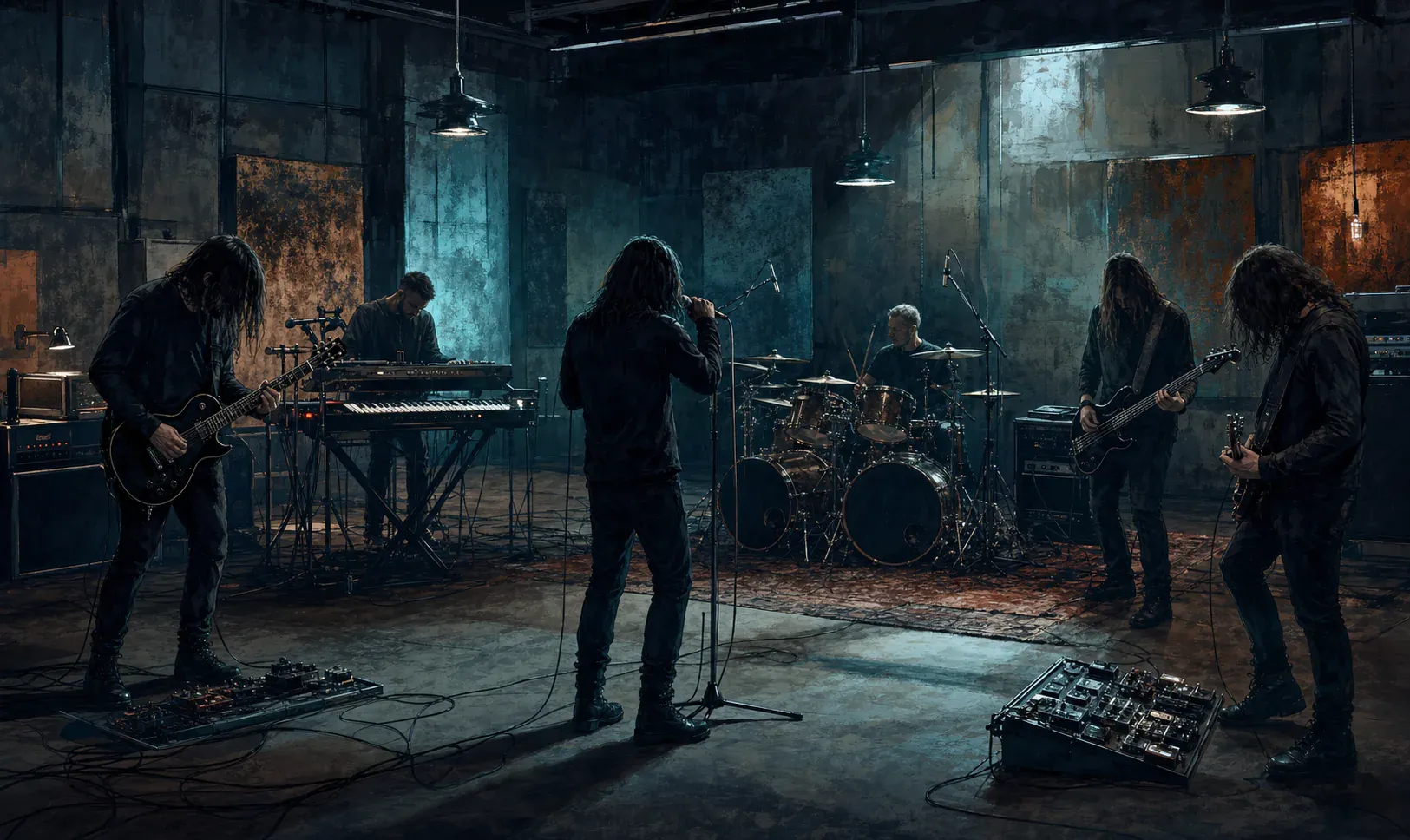
Genres are also social histories. The Museum at FIT describes the Batcave in relation to a first generation of British post-punk bands labeled gothic and to the mixture of punk, glam, art, literature, and fashion surrounding the scene. 2 Gothic rock traveled through clubs, independent shops, fanzines, radio, and later festivals. Deathrock and darkwave developed related but distinct local histories.
Metal formed through different performance circuits, record networks, and fan cultures. Birmingham’s association with Black Sabbath remains central to institutional accounts of heavy metal’s formation. 3 Gothic metal arrived much later through combinations made inside those metal networks.
This does not prohibit listeners from participating in both scenes. It explains why a black wardrobe, religious imagery, or a dramatic keyboard does not collapse their musical histories into one category.
Arrangement casework and border records
Begin with a record whose guitar is bright, chorused, and moderately driven. Those timbres may suggest gothic rock, but timbre cannot answer the classification by itself. Follow the bass through a complete verse. If it repeats a melodic figure while guitar changes from clipped chords to harmonics and delayed notes, bass is probably carrying continuity. Then follow kick and snare. A stable grid beneath independent bass and guitar parts points toward post-punk arrangement even when the mix is loud. Walser’s account of metal emphasizes riffs, power, virtuosity, and musical organization, not merely distortion. [#walser-running-devil] The absence of riff-centered coordination is useful evidence.
Reverse the problem with a slow recording that has clean verses, a low singer, and an organ-like keyboard. None of those details excludes metal. Wait for the heavy entrance and mark every low-guitar attack. If bass, kick, and two guitars land on the same changing figure, the arrangement has moved into a metal system. The clean verse is a contrast inside that system. Doom-derived pacing makes spaces large, but riffs still determine where the ensemble gathers and releases. Weinstein’s history is relevant because metal is maintained by musicians, audiences, institutions, and inherited practices as well as by sound. [#weinstein-heavy-metal]
A third case combines a melodic bassline with genuinely heavy guitar. Do not force an answer from the opening bars. Make a role chart for verse, chorus, bridge, and ending: which instrument states harmony, which supplies subdivision, which cues the next section, and which retains the hook when the voice pauses? A hybrid can change its center of gravity. One passage may use a goth-derived ostinato and another a coordinated metal riff. Calling the result a hybrid is more accurate than pretending one feature cancels all the others. Genre names summarize evidence; they are not meters with a single numerical reading.
The fourth problem is visual. A band may use black clothing, religious objects, ruined architecture, and monochrome photography while playing an ordinary alternative-metal arrangement. Turn away from the image and describe audible events. Visual participation in gothic culture and musical membership in gothic rock are related questions, not the same question. Goodlad and Bibby’s collection places goth within identity, representation, class, gender, race, and consumption. [#goodlad-bibby-goth] The Duke University Press description confirms that breadth. [#duke-goth] Taking the visual culture seriously therefore requires more precision, not less.
Production offers a second pass. A gothic-rock mix may set a large snare reverb against dry bass and thin, modulated guitar. A gothic-metal mix may place close drums and layered guitars in front while keyboards and vocal reverbs supply depth. Either genre can invert those patterns. Ask how the mix clarifies the performed hierarchy. Reduce the playback level and note which attacks still define the bar. Collapse playback to mono and hear whether wide guitar mass changes while a central bass hook remains. These tests replace adjectives such as “dark,” “lush,” and “heavy” with observations another listener can repeat.
Interactive score
Bass-led and riff-led arrangements
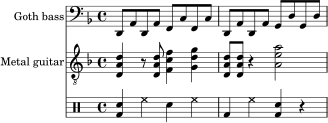
Compare a melodic gothic-rock bass ostinato with a denser metal guitar frame. Playback begins only when you press Play.
Loading the optional player…
Genre memory complicates every border case. A later audience may discover a post-punk band in a goth club, a metal band at a gothic-themed festival, or both in the same playlist. Those routes affect reception without rewriting chronology. Hodkinson describes a subculture sustained through commitment, specialist commerce, media, and social networks. [#hodkinson-goth] The Spracklens treat collective memory and boundary work as active parts of goth culture, and the publisher record frames their book as a cultural history. [#spracklen-evolution] [#emerald-goth]
Self-identification is evidence rather than an automatic verdict. If musicians describe their work as metal and perform mostly within metal circuits, say so. If listeners place a band in a long-running goth scene despite its discomfort with labels, that reception also matters. Name who uses the term and for which period. “Often heard in goth clubs” is different from “formed inside the first British gothic-rock scene.” “Uses Gothic literature” is different from “plays gothic metal.” Precise sentences can retain these facts without policing a listener’s wardrobe or collection.
Deathrock, darkwave, ethereal wave, industrial rock, doom metal, symphonic metal, and alternative metal create recurring boundary problems. None sits accurately on one axis from light to dark. Compare rhythm, instrument roles, production, scene circulation, and the artist’s chronological path. Mercer’s documentation is valuable because gothic rock is wider than a small retrospective canon. [#mercer-gothic-rock] Sharpe-Young offers a different map organized around metal’s branching lineages. [#sharpe-young-metal] Keep both maps available instead of forcing either to explain every dark-associated record.
Voice needs the same discipline. A clean high part beside a growl is an arranged contrast, not proof of a natural male-female opposition. Hill documents how metal media and institutions shape gendered participation and representation. [#hill-gender-metal] Describe range, technique, timbre, and role. This admits more singers and avoids turning a period marketing phrase into a timeless law.
A repeatable comparison
Choose one track from each field. On the first pass, ignore the vocal and follow bass. On the second, mark every guitar attack. On the third, listen to drums or drum machine. Finally, ask which part carries the song when the voice stops.
If bass and repeated spatial guitar remain independent around a post-punk pulse, gothic rock is the more useful frame. If metal riffs and their coordination with drums carry the structure, gothic metal is more likely. Border cases remain, and artists can deliberately combine the two. The distinction is a listening tool, not a purity test.
Practice: a complete comparison session
Choose two recordings with similar tempos so that speed does not dominate the first impression. Use speakers or headphones that let you follow bass at a moderate level. Do not begin with images, biographies, or playlist labels. Make four columns on paper: bass, drums, guitar, and voice. During the first playback, write only the bass rhythm in plain syllables and mark where its phrase repeats. During the second, place a stroke for each low-guitar attack and circle every sustained chord. During the third, mark kick and snare. The page should reveal whether the parts share one attack pattern or maintain separate cycles.
Repeat the process section by section. A verse may leave bass independent while a chorus aligns the full ensemble. Note which relationship carries most of the song and which is a temporary contrast. Then use a mono control. Wide guitars and stereo effects contract, making central rhythmic evidence easier to hear. Finally lower the level. Continuous low-mid mass recedes differently from a picked bass hook or sharp kick. No individual test names the genre automatically; together they support a defensible account.
For a performance exercise, write a two-bar bass ostinato that implies D minor. Repeat it unchanged through four guitar textures: silence, clipped upper-register chords, delayed single notes, and sustained noise. Keep drums on a stable backbeat. Harmony will appear to move even though bass retains the same memory. Next write a two-bar low-guitar riff with two rests and one sustained ending. Have bass reinforce its main attacks and kick select the accents. Add keyboards only after the riff works without them. The sketches can share pitches and atmosphere while organizing the band differently.
Record both with conservative gain. The sparse version needs enough pick and upper harmonic information for bass to remain legible. The dense version needs separate guitar takes rather than a copied file, but timing errors must not erase the rests. Compare stereo and mono. Ask another listener which part carries the transition without telling them the intended category. Their answer is more useful than a rating of how gothic a preset sounds.
Finish with context. Check release date, city, earlier bands, label, concert bills, and interviews. Reynolds locates post-punk experimentation in its late-1970s and early-1980s field. [#reynolds-rip-it-up] Robb follows goth through regional movement and later memory. [#robb-art-darkness] The Birmingham museum account anchors heavy metal in a place with its own industrial and musical history. [#birmingham-metal] If audible and historical evidence point in different directions, write down the tension. A band can borrow a method, change affiliation, or produce a genuine hybrid.
Exercise one: separate pulse from atmosphere
Choose a recording with obvious reverb and another that sounds comparatively dry. Do not compare their moods yet. Count the main pulse for thirty seconds and write which instrument makes it easiest to maintain. Repeat while following subdivisions between the beats. A drum machine may state a rigid eighth-note layer while bass syncopates around it; a metal drummer may place kick attacks directly beneath a low-guitar pattern while cymbal decay supplies apparent space. Reverb can make both recordings feel large, but it does not determine those internal relationships.
Turn effects down if multitracks or a remix session are available. If they are not, use short listening windows and focus on the first instant of each attack. Note whether guitar begins before, with, or after the bass note. Note whether kick duplicates every low attack or only the start of the bar. Then return to the full decay. This order keeps atmosphere from masking the performed grid.
Write a four-sentence report with no genre adjectives. Sentence one names the pulse source. Sentence two describes bass duration. Sentence three describes guitar attacks and gaps. Sentence four describes drum coordination. Only then add a fifth sentence about scene and likely genre. If the conclusion cannot be supported by the first four, the evidence is too thin.
Exercise two: exchange the instrument roles
Take the original bass ostinato in the static score and teach it to guitar. Play it as low power chords with short palm muting while bass sustains roots. The pitches remain related, but the guitar now owns the repeating attack pattern. Add kick to the first and third guitar attacks, then to every attack. Listen to how the ensemble moves toward a riff-centered metal relationship without any change of lyrical subject or clothing.
Reverse the exchange with a compact metal riff. Let bass play its contour clearly, then replace the guitar with high sustained harmonics, delayed single notes, or one clipped chord per bar. Keep drums on a stable backbeat instead of tracing the riff. The same pitch sequence now behaves as an independent bass memory inside a sparse field. The exercise does not prove that arranging alone can rewrite history. It makes the functional difference audible enough to recognize in existing records.
Record both versions at equal loudness. Avoid changing to a more dramatic reverb or a different vocal style between passes. Ask listeners which part they would sing after one play and which part signals the next section. Their answers reveal musical hierarchy more reliably than asking which take sounds darker.
Exercise three: analyze the voice in context
Select one low clean vocal, one high clean vocal, and one harsh vocal from recordings in the two fields. Describe breath, onset, sustain, vibrato, consonants, range, and position in the mix. Do not write “goth voice,” “operatic,” or “aggressive” until the concrete features are listed. A low singer can use close dry speech, distant theatrical projection, or a sustained melodic line. A harsh singer can sit over death-doom riffs or appear as a brief color in an otherwise clean arrangement.
Mute or mentally ignore the voice and classify the instrumental organization. Bring the voice back and ask what it changes: density, register, phrasing across the riff, or the perceived distance of the whole mix. If the category flips only when a stereotyped voice enters, examine whether you are identifying arrangement or recognizing a marketing cue.
For a duet, chart turns rather than genders. Mark solo lines, overlap, call and response, harmonic support, and which singer carries the chorus. This avoids treating one period’s promotional language as a natural binary and produces a description useful for any set of performers.
Exercise four: document scene evidence
Build a small source table for one band. Include contemporary interviews, label pages, venue bills, fanzines, later histories, and at least one account from outside the band’s own publicity. Record dates and distinguish a contemporary label from a retrospective one. An artist called post-punk in 1981 may appear under goth in a later festival archive; both facts can be true and should not be collapsed.
Check whether a source discusses sound, audience, style, or commerce. Museum fashion material can establish how a club looked and who gathered there, but it may not analyze bass phrasing. A production interview can explain guitar layers without establishing scene membership. Assign each citation the job it can actually do.
End with three bounded claims: one about audible organization, one about historical circulation, and one about self-identification or reception. Add uncertainty where the record is mixed. This method respects participants while preventing confident genre claims from resting on a playlist thumbnail.
Exercise five: test a genuine hybrid
Write sixteen bars that deliberately move between systems. In bars one through eight, use melodic bass, independent spatial guitar, and a stable post-punk beat. In bars nine through twelve, let guitar take the bass contour as a palm-muted riff and align kick with selected attacks. In bars thirteen through sixteen, keep the riff but restore an independent bass counterline. The transition should be audible without a new keyboard preset or vocal costume.
Map what remains constant: tempo, tonal center, main contour, and perhaps vocal melody. Map what changes: note length, orchestration, kick relationship, stereo density, and the part that cues form. A hybrid is convincing when both logics do real work. Adding string pads to an unchanged metal arrangement or distortion to an unchanged goth arrangement may alter atmosphere without producing the same structural exchange.
Mix the passage in one shared room sound. This prevents production from announcing the answer. Play it for another musician and ask them to mark the point where the organizing part changes. Revise the arrangement if the transition depends only on volume. The result is a practical model for hearing artists who cross the boundary without erasing the two histories that make the crossing legible.
Exercise six: compare complete albums without averaging them
Choose one album from each field and make a track-by-track role table. Do not assign the album one sound before listening. For every track, note the main pulse source, the part that retains the hook, the relationship between kick and low guitar, the use of silence, and the production’s foreground. A quiet interlude and a heavy closing track may use different systems even when sequencing makes them belong to one work.
After the first pass, group tracks by arrangement rather than title or mood. One group might use independent bass and guitar; another might use coordinated riffs; a third may avoid either pattern. Count the groups only after describing them. This keeps a famous single from standing in for forty minutes of music.
Read contemporary reviews and artist interviews after the audio table is complete. Mark which labels came from musicians, journalists, labels, distributors, or later databases. Dates matter. A term used in a reissue campaign may describe present reception accurately without proving that participants used it during recording.
Compare artwork separately. List Gothic literary references, fashion codes, typography, and photographic settings without converting them into musical claims. Then ask how the visual frame guides attention toward specific sounds. A cathedral image may make an organ pad feel central even when the riff determines form; a minimal sleeve may hide a dense metal production. Reception can alter emphasis without changing the recorded events.
Finish with a paragraph that permits internal difference. Name the dominant genealogy, the strongest audible evidence, the scene evidence, and any track that resists the summary. Avoid rankings of purity. The useful result explains how the record works and why listeners may place it differently. That conclusion is more durable than sorting an album by the darkness of its cover or the register of one singer.
Repeat the album comparison a week later without looking at the first table. Memory will favor hooks, dramatic entrances, and visual associations. Compare the new notes with the original close listening. Where they differ, return to the exact passage and time-stamp the evidence. This delayed pass shows which instrument roles remain memorable and which claims depended on immediate concentration.
Ask another listener to complete the same table independently. Do not correct their genre terms until both descriptions are finished. Agreement about attacks, durations, and section cues can coexist with disagreement about labels. That is useful: the audible account becomes shared evidence, while the historical section explains why classification can remain contested. Preserve both rather than manufacturing certainty.
The final editorial check is simple. Remove every use of dark, gothic, heavy, and atmospheric from the draft. If the analysis still identifies bass function, riff coordination, drum force, production depth, scene history, and source limits, it can earn some of those adjectives back. If little remains, the comparison needs more listening.
Keep the listening notes with dates and playback conditions. Genre judgment changes with familiarity, remasters, and context; a short record of the evidence makes revision honest instead of presenting the latest impression as timeless fact.
That record also gives later editors a clear point from which to disagree.
Keep it available.
Static score: bass as an ostinato
Source details follow the article.